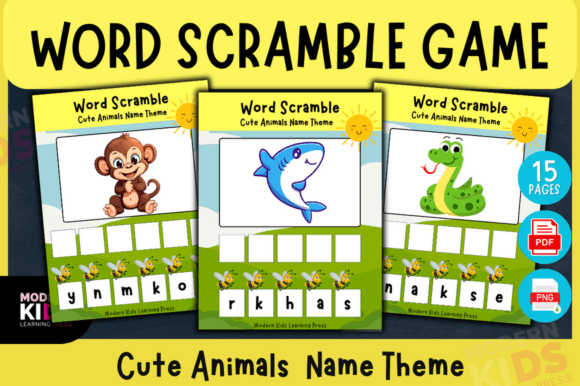
Word Scramble Game for Autism: A Playful Path to Language Development
For individuals with autism, learning often thrives in environments that are structured, engaging, and sensory-friendly. The Word Scramble Game for Autism bridges the gap between traditional educational tools and interactive play, offering a unique experience tailored to the cognitive and sensory needs of users on the autism spectrum. At its core, this game transforms the classic word scramble format into a purposeful learning activity, enriched with a charming animal theme that encourages focus, language retention, and cognitive development.
Why Interactive Learning Matters for Autism Education
In recent years, educators and therapists have increasingly recognized the value of interactive and multisensory approaches in autism education. Traditional learning methods may not always resonate with neurodiverse learners, making gamified experiences like the Word Scramble Game for Autism a compelling alternative. These tools provide a scaffolded way to build vocabulary and comprehension skills while maintaining motivation through visual rewards and playful elements.
As learning becomes more personalized and adaptive—especially in digital spaces—tools that combine structure with creativity are gaining traction. The Word Scramble Game for Autism aligns with this shift by offering a tactile, visually engaging format that supports different learning styles without overwhelming the user.
Designing for Accessibility and Engagement
One of the standout features of the Word Scramble Game for Autism is its autism-friendly design. The interface avoids sensory overload by using clear fonts, consistent layouts, and minimal background distractions. Each puzzle is presented with a limited number of letters, reducing cognitive fatigue while still offering a meaningful challenge.
- Visual cues are enhanced with animal-themed illustrations
- Color contrast is optimized for clarity and focus
- Navigation is intuitive, supporting independent play
This thoughtful design ensures that users can engage with the content comfortably, making it a valuable tool for both home and classroom settings.
The Role of Visual Themes in Learning
The cute animal theme is more than just an aesthetic choice—it’s a deliberate strategy to enhance engagement and memory retention. By associating words with friendly, recognizable images, the game supports visual learning and semantic mapping. For example, when a player unscrambles the word "dolphin," they’re greeted with an animated illustration of a dolphin, reinforcing the connection between the word, its meaning, and the visual representation.
This method is particularly effective for users who benefit from visual scaffolding, a common trait among many individuals with autism. It also introduces an emotional element—playfulness, curiosity, and even a sense of achievement—that can enhance motivation and reduce learning-related anxiety.
Language Development Through Play
At its foundation, the Word Scramble Game for Autism is a language-building tool. Unscrambling letters requires players to think critically about word structure, phonics, and spelling patterns. Over time, this practice contributes to improved vocabulary, reading comprehension, and verbal expression.
What sets this game apart is its balance between challenge and accessibility. Unlike generic word games that may present overly complex puzzles or time constraints, this version is designed to be self-paced and forgiving. Mistakes are part of the process, and hints are available to guide players without diminishing the sense of accomplishment.
For educators and parents, this makes the game a versatile supplement to speech therapy, literacy instruction, or daily learning routines. It’s especially effective for learners who may struggle with traditional reading or writing tasks but respond well to visual and interactive formats.
From Puzzle to Skill Development
Beyond vocabulary, the game promotes broader cognitive skills. Problem-solving, pattern recognition, and sequential thinking are all activated during gameplay. Each puzzle requires players to consider multiple possibilities, test combinations, and adjust strategies—skills that are transferable to real-world learning and decision-making.
Professionals working in special education or developmental therapy may find this game useful as a low-pressure, high-engagement tool. It allows for observational assessment of a learner’s strengths and challenges without the pressure of formal testing. Additionally, the game’s replayable nature means users can revisit puzzles, reinforcing concepts and building confidence over time.
Meeting Modern Learning Expectations
Today’s learners—especially younger generations—expect content to be interactive, visually engaging, and adaptable. The Word Scramble Game for Autism reflects this shift by offering a digital-first experience that can be accessed on tablets, computers, or printed for offline use. This flexibility supports diverse learning environments, from home schooling to therapy sessions and classroom centers.
From a business or product development perspective, the growing emphasis on inclusive design and educational technology has made games like this more relevant than ever. As schools and families seek out tools that align with neurodiversity-affirming practices, solutions that combine accessibility with educational value are gaining traction in both mainstream and niche markets.
Practical Applications for Educators and Parents
For educators, the Word Scramble Game for Autism can serve as a supplemental activity that supports curriculum goals while offering a break from traditional instruction. It’s especially effective when integrated into literacy centers, speech therapy sessions, or quiet time rotations. Teachers can customize the difficulty level or pair the game with other language activities to create a cohesive learning experience.
Parents and caregivers can use the game at home to reinforce vocabulary and encourage independent learning. It’s also a great option for travel or downtime, offering a screen-based activity that’s both educational and calming. The absence of time limits or high-pressure mechanics makes it suitable for users with varying attention spans and processing speeds.
Freelancers and content creators in the special education space may find opportunities to develop or collaborate on similar tools, especially as demand for inclusive, gamified learning grows. Whether through app development, printable puzzle packs, or integration into digital learning platforms, the Word Scramble Game for Autism serves as a model for how education can evolve to meet diverse learner needs.
Looking Ahead: The Future of Autism-Focused Learning Tools
As technology continues to reshape education, the potential for autism-focused learning tools like the Word Scramble Game is expanding. Future iterations could include adaptive algorithms that adjust puzzle difficulty in real-time based on user performance, or multi-sensory features like audio prompts and tactile feedback for users with additional sensory needs.
There’s also room for community-driven development—allowing educators, therapists, and parents to contribute word lists or themes tailored to specific learners. This collaborative approach not only improves the tool’s relevance but also fosters a sense of ownership and engagement among users.
In a broader sense, the rise of games like this reflects a growing recognition of the importance of personalized, inclusive learning. As society moves toward more flexible and empathetic educational models, tools that support neurodiverse learners will play an increasingly central role in shaping the future of learning.